How We Work
Turning Advanced Analytics into Real Business Impact
From models to measureable results
At pyAxiom, case studies are not academic exercises – they are documented examples of how advanced analytics changes real business outcomes. Each case represents a concrete collaboration where data, domain knowledge and engineering discipline come together to solve a clearly defined business problem. Our focus is not on isolated models, but on deployable solutions that integrate seamlessly into existing business processes.
We work primarily in Python and R, selecting the language and tooling that best fits the client’s data landscape, operational constraints and long-term maintainability. Whether the task involves forecasting, optimization, risk modelling, anomaly detection or segmentation, our approach remains consistent: start from the business decision that needs to be improved, then design the analytical solution backwards from that goal.
Deep expertise in Python and R
Our core analytical work is built on Python and R, with extensive experience across the modern data science ecosystem. In Python, this includes statistical modelling, machine learning, optimization and production-grade pipelines. In R, we bring strong capabilities in exploratory analysis, statistical inference, time series modelling and rapid prototyping.
Where appropriate, we also use R/Shiny to deliver web-based analytical applications. These allow complex models to be exposed through intuitive user interfaces, enabling business users to interact with scenarios, assumptions and outcomes without needing technical expertise. Shiny-based systems are particularly effective for internal decision-support tools, proof-of-concept deployments and situations where fast iteration is critical.
Enhancing existing ERP and enterprise systems
A recurring theme across our projects is that valuable data already exists inside enterprise systems – ERP platforms, transaction databases, operational data stores – but the analytical layer is missing or outdated. Rather than replacing these systems, we augment them with modern analytical intelligence.
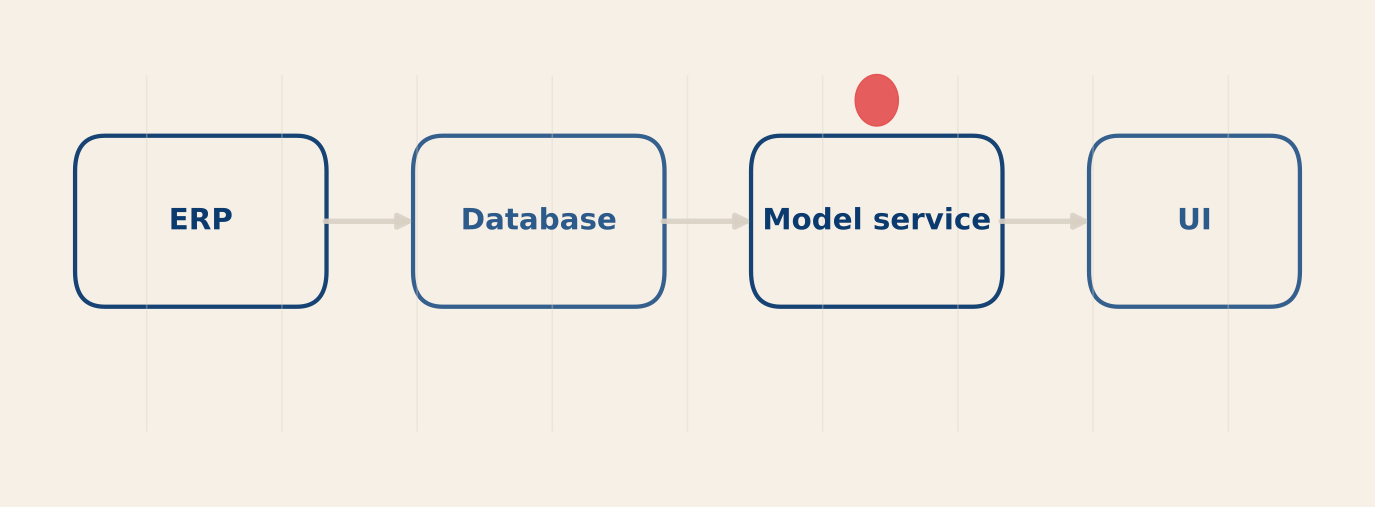
Through secure database connections and backend integrations, we enrich existing workflows with forecasting, optimization and AI-driven insights. This means that new analytical capabilities can be introduced without disrupting current operations. In many cases, users continue working in the same systems they already know, while advanced logic runs invisibly in the background.
This integration-first mindset is especially valuable in B2B environments, where stability, auditability and long-term support matter more than experimental tooling.
Enhancing existing ERP and enterprise systems
A recurring theme across our projects is that valuable data already exists inside enterprise systems – ERP platforms, transaction databases, operational data stores – but the analytical layer is missing or outdated. Rather than replacing these systems, we augment them with modern analytical intelligence.
Through secure database connections and backend integrations, we enrich existing workflows with forecasting, optimization and AI-driven insights. This means that new analytical capabilities can be introduced without disrupting current operations. In many cases, users continue working in the same systems they already know, while advanced logic runs invisibly in the background.
This integration-first mindset is especially valuable in B2B environments, where stability, auditability and long-term support matter more than experimental tooling.
AI where it adds value
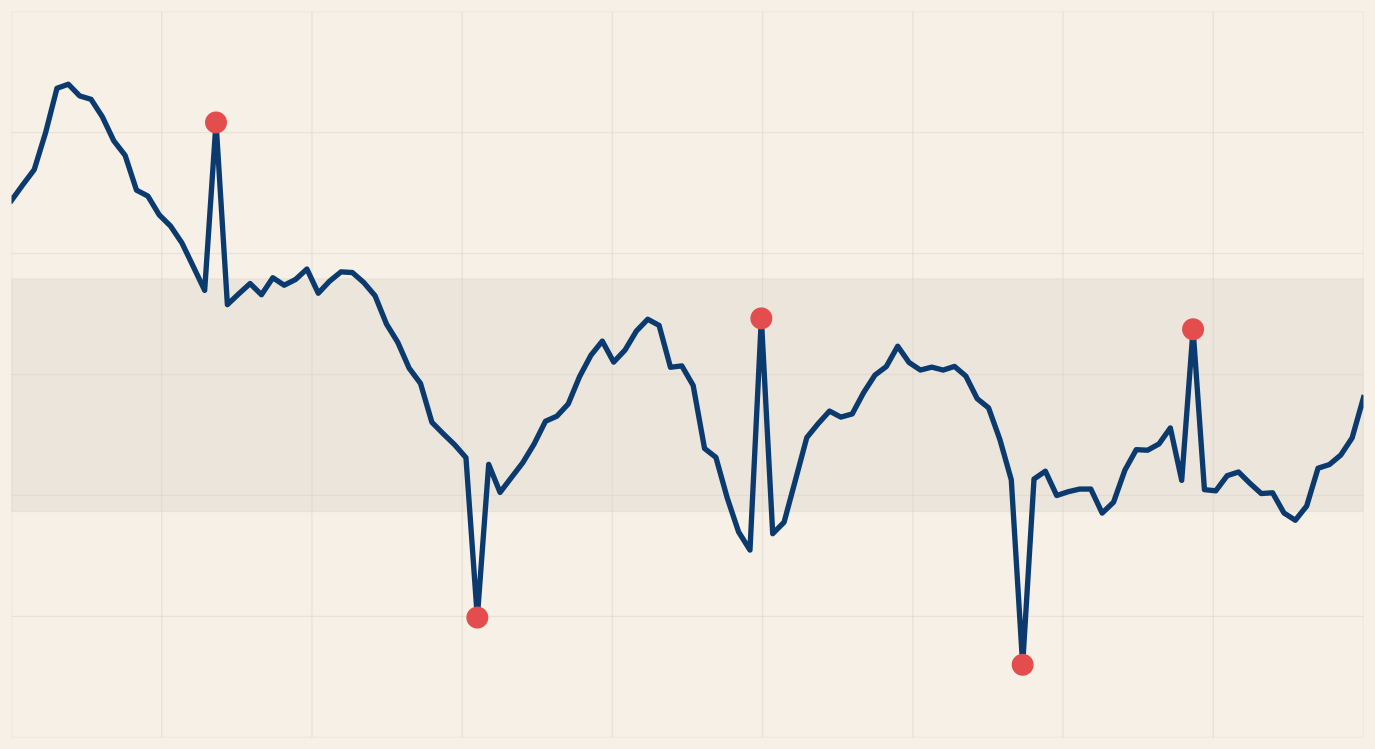
Artificial intelligence and machine learning are powerful tools, but only when applied thoughtfully. In our case studies, AI is used where it demonstrably improves decision quality – for example in demand forecasting, fraud and anomaly detection, customer segmentation or predictive maintenance.
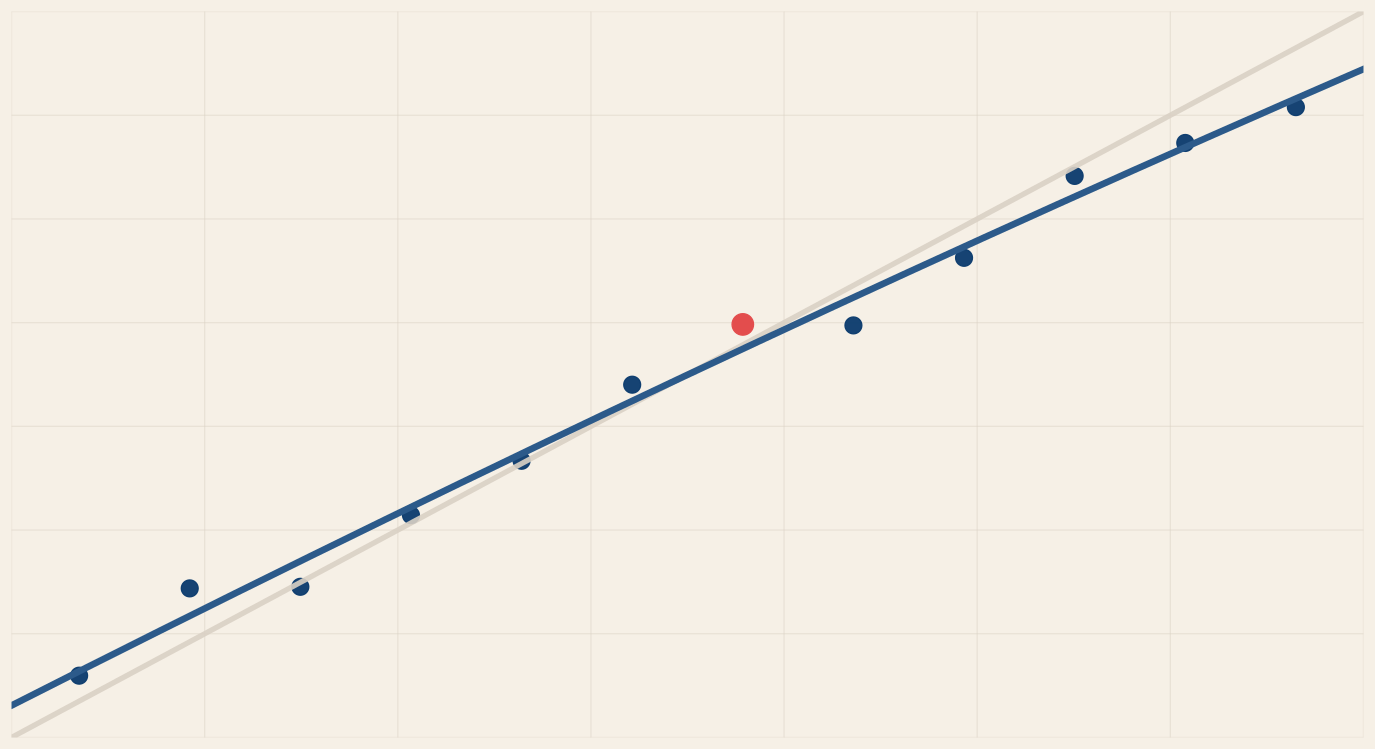
Equally important is knowing when simpler statistical or optimization approaches are the better choice. Many of our most successful projects combine classical methods with modern machine learning, balancing transparency, robustness and performance.
The result is solutions that business stakeholders can trust, explain and operationalize.
B2B collaboration model
We typically work in close B2B partnerships, acting as an analytical extension of our clients’ teams. Collaboration often happens at the system level: our models and services run in the background, connected directly to client databases or data pipelines, while results are surfaced through dashboards, reports or existing enterprise interfaces.
This model allows organizations to access advanced analytical capabilities without building a full in-house data science team, while retaining full ownership of their data and business processes.
Proven international experience
Our work is grounded in 28 years of international professional experience, spanning:
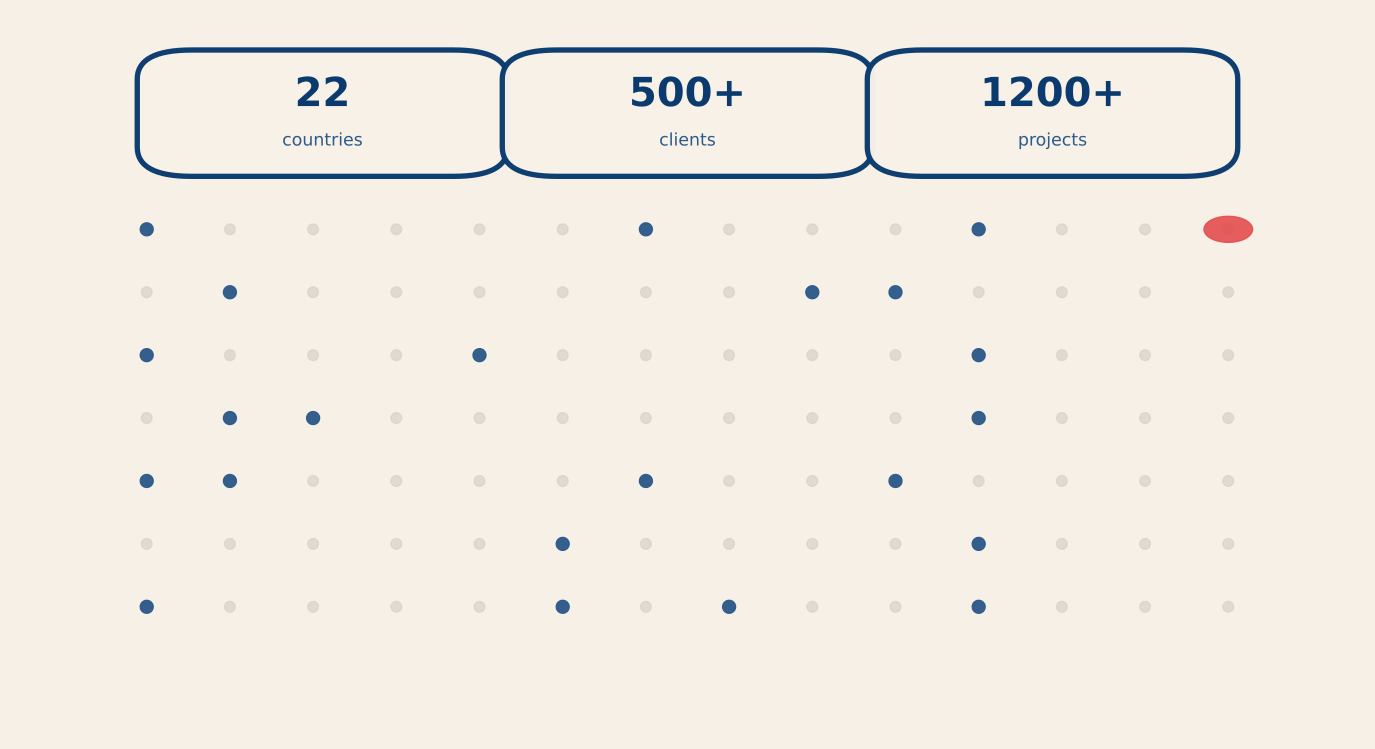
- 22 countries across Europe, North America and beyond
- 500+ clients, from SMEs to large enterprises
- 1200+ completed projects in analytics, optimization and decision support
This breadth of exposure means we are comfortable operating across industries, regulatory environments and organizational cultures. It also means that we bring patterns, lessons learned and best practices from a wide range of real-world contexts into every new engagement.
What our case studies represent
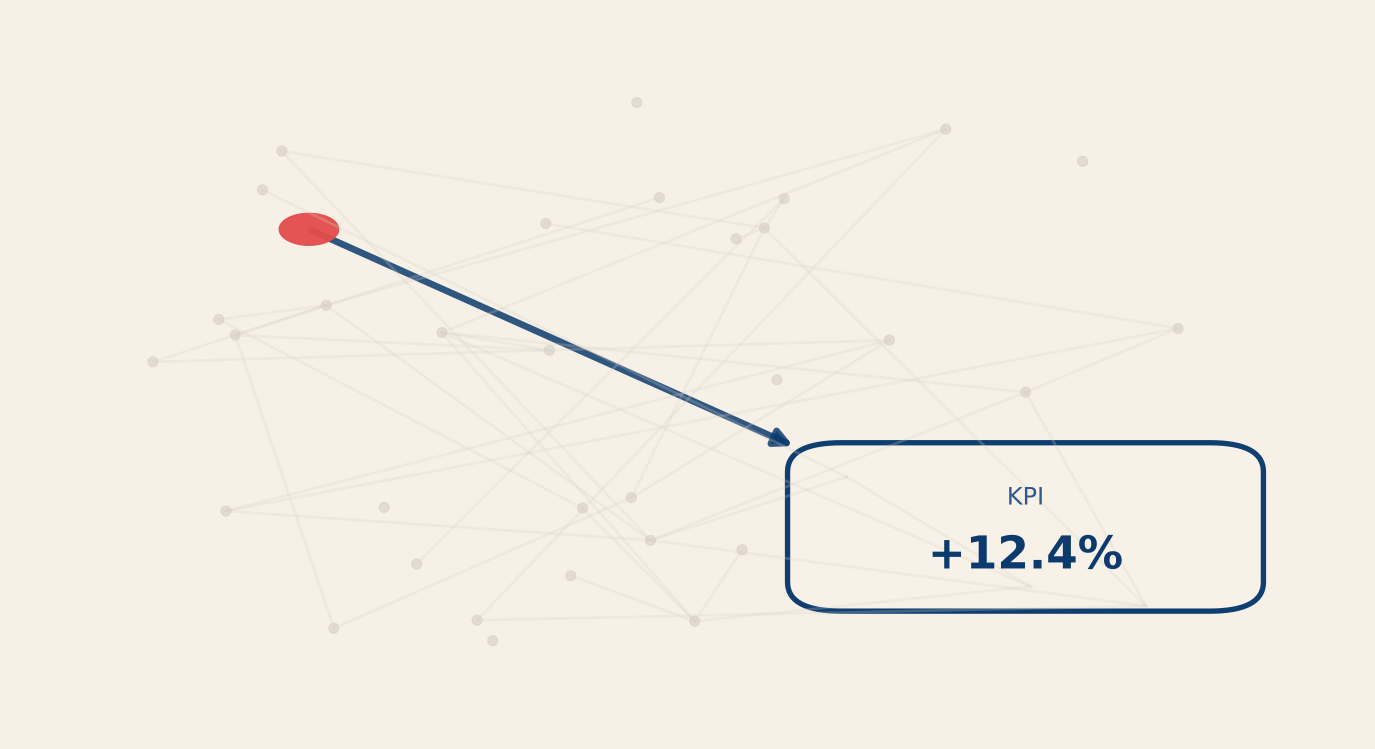
Each case study on this site highlights a specific business challenge, the analytical approach used to address it, and the measurable impact achieved. Together, they illustrate a consistent philosophy: advanced analytics should be practical, integrated and economically meaningful.
If you are looking to enhance your existing systems with modern analytical intelligence – whether through Python, R, web-based tools or backend integration – these case studies offer a realistic picture of what that collaboration can look like.