
Unlocking Civic Insights with NYC Open Data and the nycOpenData R Package
New York City publishes one of the most comprehensive and accessible open data catalogs in the world. In this post, we’ll explore what NYC Open Data is, why it matters for data analysts and researchers, and how the new nycOpenData R package makes working with these rich civic datasets easier and more reproducible than ever.
What is NYC Open Data?
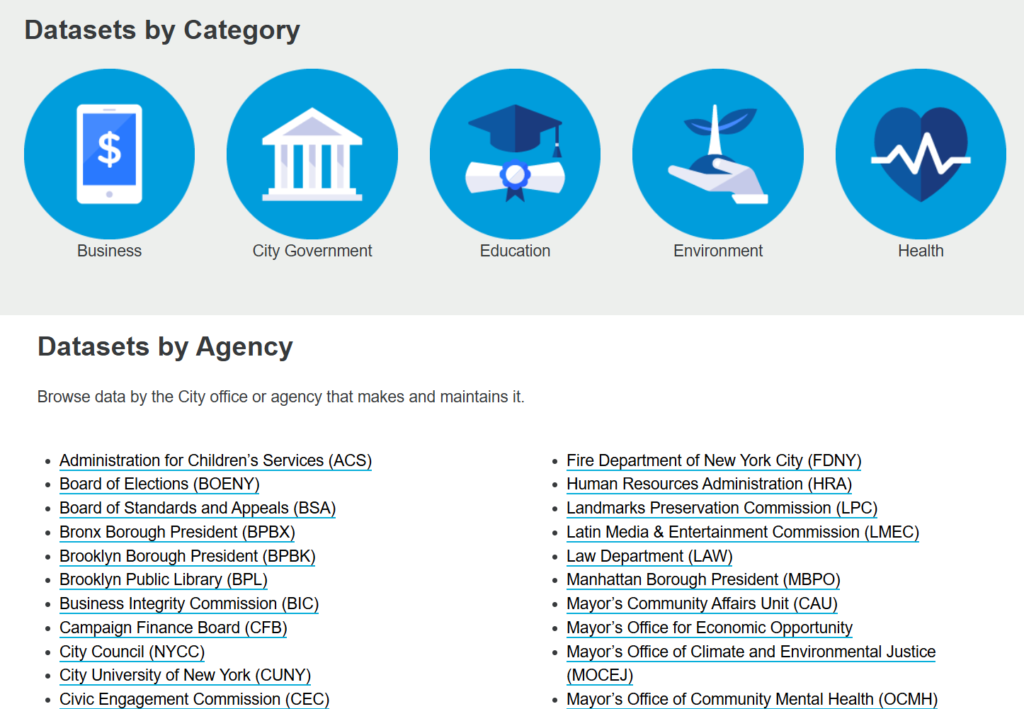
NYC Open Data is the official open data platform of the City of New York, providing free access to hundreds of datasets from numerous city agencies and partners. It covers topics such as public safety, housing, transportation, education, health, city services, and more. Users can browse and search the full catalog, access metadata, use built-in visualization tools, or connect directly to data via APIs.
A few examples of what you can explore on the platform include:
- 311 service request records
- school attendance and performance data
- environmental measurements
- motor vehicle collision reports
… and much more.
NYC Open Data has become a valuable resource for journalists, civic technologists, researchers, and analysts aiming to understand urban dynamics and inform policy.

The Challenge for Analysts
Even though the data is publicly available through APIs (powered by Socrata), using it directly in a reproducible data analysis workflow can be challenging:
- You need to know the dataset IDs
- API responses are paginated
- You may need to handle timeouts, filters, and sorting manually
- Pre-processing the raw JSON into tidy data structures takes extra work
These hurdles can slow down exploratory analysis or make public data less accessible for teaching and research.
This is where a dedicated interface package can help.
Introducing the nycOpenData R Package
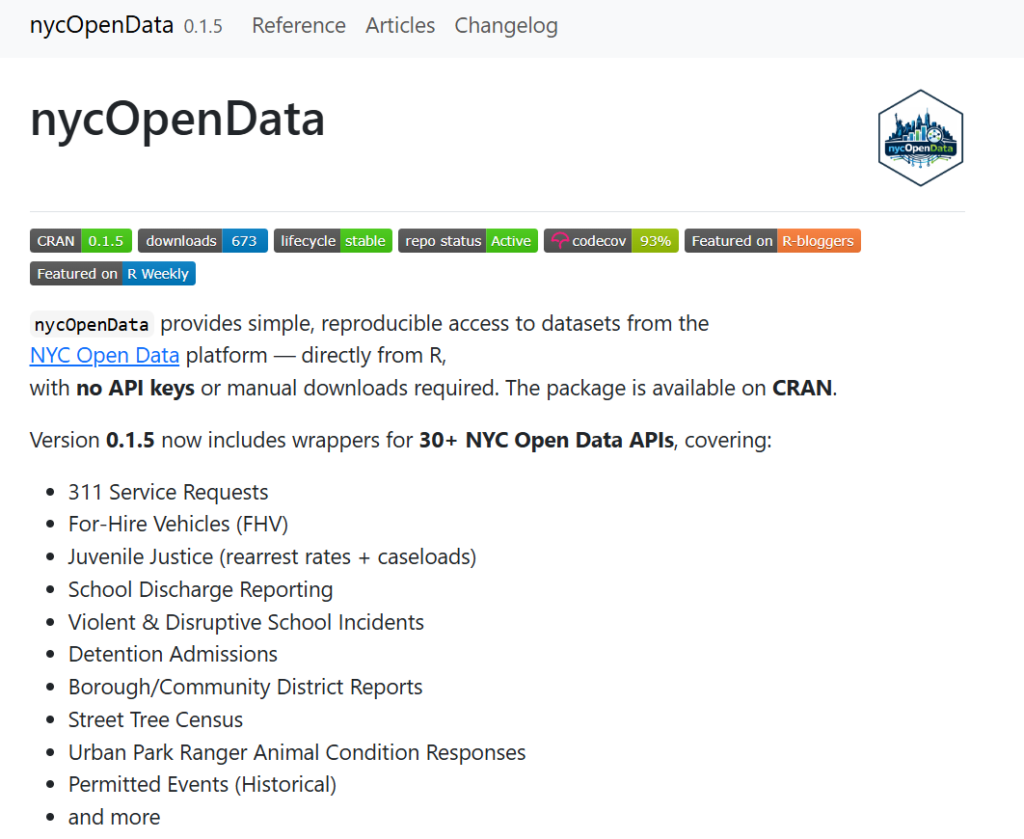
The nycOpenData package provides a unified, user-friendly R interface to many of the most popular datasets hosted on NYC Open Data. Instead of having to craft raw API calls, analysts can use straightforward R functions that return tidy tibbles ready for downstream analysis.
Key features include:
- Simple functions corresponding to specific NYC datasets
- Support for row limits and optional filters
- Consistent API-level handling without requiring manual JSON parsing
- Designed for reproducible research and data literacy
The package was developed to lower the barrier for students, educators, and researchers who want to work with civic data in an idiomatic R environment.
Example: Exploring 311 Service Requests in R
Here’s a short R example that demonstrates how to fetch and inspect a portion of the 311 service request dataset — one of the most widely used datasets in the NYC Open Data catalog.
library(nycOpenData)

# Fetch a sample of 311 service requests
df_311 <- nyc_311(limit = 1000)

# View the first few rows
head(df_311)
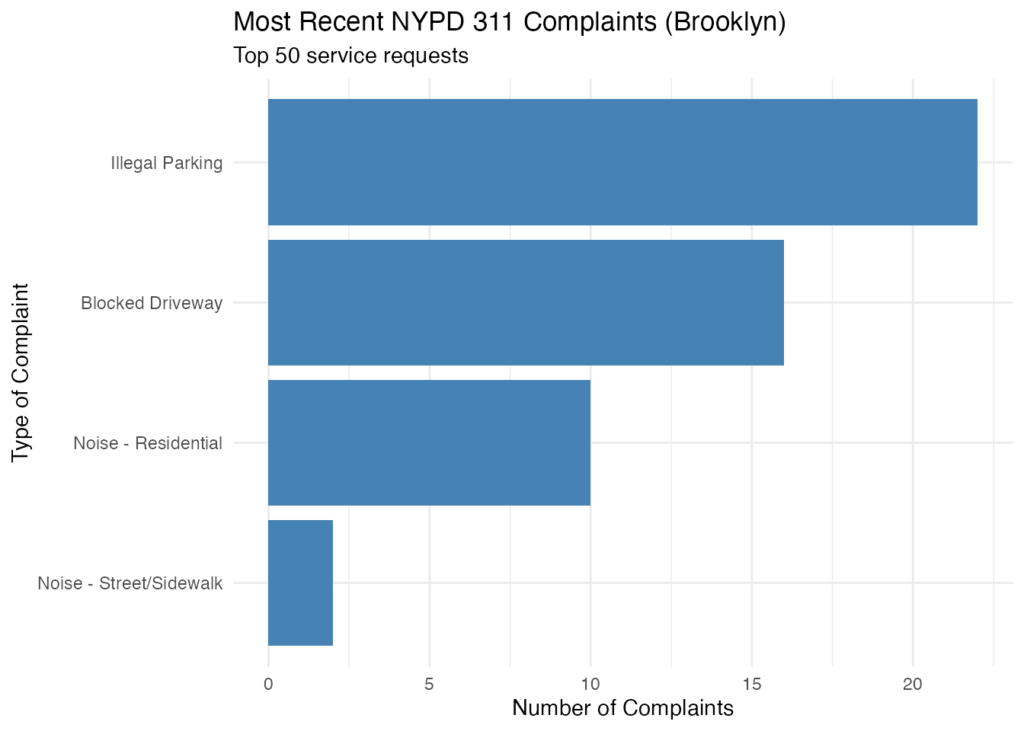
This will retrieve up to 1,000 rows of recent 311 requests, such as noise complaints, illegal parking reports, or street condition requests, and return them in a clean tibble for exploratory analysis.
From here, you could easily:
- group requests by complaint type to see the most frequent issues
- map geospatial patterns by borough
- model trends over time
All without manual API handling or intermediate JSON parsing. dedicated interface package can help.
Why This Matters for Statisticians and Data Analysts
Using a package like nycOpenData fits into larger best practices for statistical data analysis and reproducible workflows:
- Tidy data, ready for visualization and modeling
- Scriptable access, so analyses can be automated or shared
- Consistent functions, making it easier to teach and learn
- Reproducible research, supporting transparent methodologies
For anyone studying urban data — whether public safety, transportation, housing, or civic engagement — this package removes friction and lets you focus on insights rather than boilerplate data acquisition code.
Resources:
- NYC Open Data – Open Data for All New Yorkers
https://opendata.cityofnewyork.us - nycOpenData R package
https://martinezc1.github.io/nycOpenData/ - Editorial assistance: AI-based language editing